


I’m glad to help you create an engaging and SEO-optimized blog post by transforming the given article. Let’s dive into it:
—
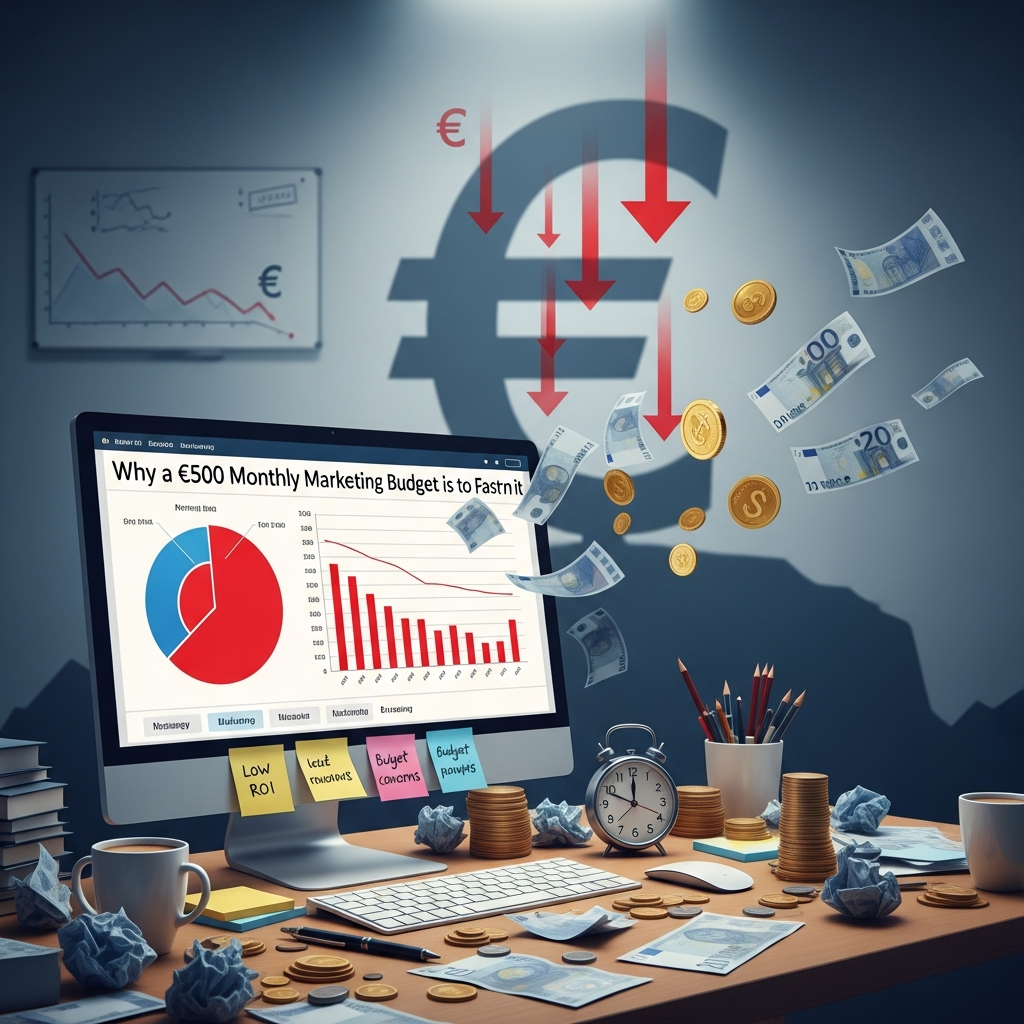
Discover Why a €500 Monthly Marketing Budget Might Be Riskier Than You Think
Have you ever thought about investing a small amount of money into marketing each month, hoping it’ll yield significant returns? If a €500 monthly marketing budget sounds like a good idea, you might want to think again. In this blog post, we’ll explore why this seemingly modest investment could lead to quicker losses than gains.
Breaking Down the Myth of Low-Budget Marketing
Let’s first consider why someone would settle on a €500 monthly budget for marketing. It seems manageable, and there’s an expectation that even a small amount can generate big returns, right? But here’s the truth: marketing is like planting a garden. If you don’t nurture it with enough resources—time, effort, and money—you might end up with nothing to show for it.
How Much Impact Can €500 Really Make?
Spending €500 on marketing can be compared to putting a drop in a vast ocean. Yes, you’re doing something, but is it significant enough to create actual waves? Here’s a breakdown of where that money might go:
–
–
–
Each of these areas requires a sustained investment over time to see genuine growth and engagement.
Compromising Quality for Budget
Have you ever tried to take a shortcut, only to find it took longer? A small budget might force you into choosing lower-quality options, which can negatively impact your brand’s image. When marketing, quality matters as much as—if not more than—the quantity of your efforts.
The Ripple Effect of Inadequate Marketing Investments
A weak marketing effort sets off a chain reaction. Imagine building a house with subpar materials; it might stand, but for how long? Your brand needs a strong foundation to support growth and expansion.
The Hidden Costs of Budget Marketing
Here’s something many people don’t consider: the hidden costs. Saving today might mean spending more tomorrow to repair or redo campaigns. Let’s look at some potential pitfalls:
–
–
–
Learning from Mistakes: A Real-Life Example
Take John, who runs a small online bookstore. Initially believing a €500 budget would suffice, he focused on ads and cheap content. A few months in, he realized his revenue hadn’t increased as expected. Frustrated, he invested in comprehensive strategies, seeing returns within months. John’s experience shows that investing right from the beginning can be a game-changer.
How to Re-evaluate Your Marketing Strategy
Now that we’ve highlighted the shortcomings of a limited budget, it’s time to rethink your strategy. Here’s how to navigate:
Focus on Value Over Cost
Would you rather buy a cheap sweater that needs replacement every season or invest in a quality one that lasts? The same logic applies to marketing. Consider the long-term value instead of just short-term savings.
Set Realistic Expectations
Rome wasn’t built in a day, and neither is brand recognition. Set milestones according to both your timeline and budget. Strategically plan your budget to allow room for testing and scaling successful methods.
Balancing Risk with Reward
Every marketing strategy has risks, but smarter investments can minimize these. Conduct tests to see which channels yield the best ROI before committing larger funds.
Final Thoughts: Why Smart Investment Pays Off
Successful marketing is part science, part art. It requires enough investment to effectively communicate your brand’s story. Going beyond a basic budget doesn’t necessarily mean breaking the bank; it means being strategic and willing to spend where it counts.
Call to Action: Let’s Make Your Budget Work Smarter, Not Harder
Ready to transform your marketing budget into real growth? Check out our tailored marketing services designed to maximize every euro you spend. for a customized consultation!
Remember, the right investment now will save money, time, and stress in the future. Happy marketing!
—
By ensuring your marketing budget aligns with your goals, you’re not only mitigating risks but also paving the way for sustainable growth.

Related Posts