


Simplified Strategy for Meta Ads to Boost Your Campaign Results
Have you been pouring time and money into Meta Ads (formerly known as Facebook Ads), only to feel like you’re not getting the returns you expected? Don’t worry—you’re not alone. Many businesses struggle to crack the code when it comes to running effective ad campaigns on platforms like Facebook and Instagram.
The good news? You don’t need to be a tech wizard or marketing guru to see results. With the right simplified strategy, you can turn things around and create campaigns that actually perform. Whether you’re a small business owner, freelancer, marketer, or just starting out in the digital ad space, this guide is for you.
In this article, we’ll walk you through a straightforward, easy-to-understand approach to using Meta Ads in a way that gets results—without the overwhelm.
What Are Meta Ads and Why Should You Care?
Before we dive into strategy, let’s make sure we’re on the same page. Meta Ads are advertisements run on Meta platforms—mainly Facebook and Instagram. These platforms offer powerful tools to help you reach specific audiences, whether you’re trying to grow your brand, get leads, or make sales.
But here’s the catch: with so many features, ad types, and settings, it’s easy to get lost. That’s why keeping things simple and focused is the key to getting real results.
The Three-Part Simplified Meta Ads Strategy
Let’s break this down into three easy phases:
- Setting the foundation
- Building your campaign structure
- Optimising for performance
Think of it like building a house—you want a strong base, efficient layout, and constant upkeep to keep it standing tall.
Phase 1: Setting the Foundation
1. Understand Your Customer Journey
Before you run any ads, take a step back and ask: How do people go from not knowing about me to becoming a customer?
This is where we map out the customer journey. It usually has three simple stages:
- Top of Funnel (Awareness): People don’t know who you are yet.
- Middle of Funnel (Consideration): People know you exist and want to learn more.
- Bottom of Funnel (Conversion): People are ready to buy.
Understanding this journey helps you serve the right message at the right time. Think of it like dating—you don’t propose on the first date, right?
2. Get Clear on Your Offer
Your ad needs to point to a compelling offer. This doesn’t necessarily mean discounts or flashy deals—it simply means giving your audience a reason to care.
Ask yourself:
- What makes my product or service a no-brainer?
- What problem am I solving?
- What outcome does the user get?
Example: If you sell fitness coaching, your offer might not be “Get a coaching session,” it might be “Discover how to lose 10 pounds in 30 days—without giving up your favourite foods.”
3. Pixel and Events Setup
Now for the technical bit (we promise, it’s simple). The Meta Pixel is a small piece of code you place on your website. It tracks actions people take after clicking your ad, like visiting a page or making a purchase.
If you’re not tracking these things, you have no idea whether your ad is working. It’s like throwing darts in the dark.
Phase 2: Building Your Campaign the Right Way
Once your foundation is set, we move on to creating campaigns. Many people get stuck here or overcomplicate things. So, let’s simplify.
1. One Campaign, One Objective
Each ad campaign should ideally focus on one clear goal. Do you want more traffic? Leads? Sales?
Don’t try to do everything in one campaign. Pick one desired action and structure your ad set around that. In Meta Ads Manager, you’ll be able to pick an objective—choose wisely.
2. Audience Targeting
Meta has tons of audience targeting options, but here’s a simple approach:
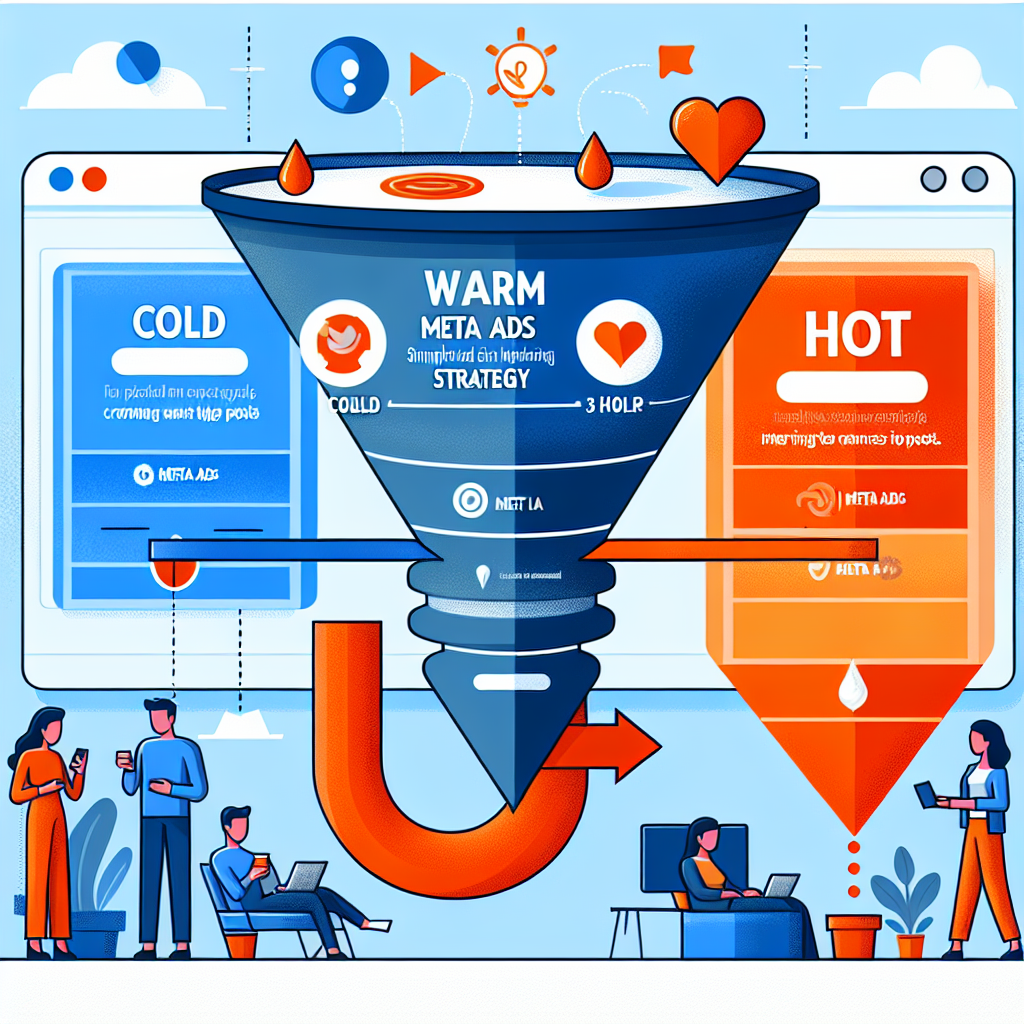
- Cold Audiences: People who don’t know you yet. You can target based on interest, behaviour, or demographics.
- Warm Audiences: People who’ve engaged with your brand—visited your website, followed your page, etc.
- Hot Audiences: People very close to buying—maybe they added to cart or signed up for your email list.
Start broad, but don’t forget to retarget those warm and hot audiences. Sometimes all they need is a nudge.
3. Creative That Connects
The creative (images or video) is hands-down the most important part of your ad. Here’s how to make it work:
- Keep it native: Make your ad look like a regular post. This blends in better and gets more engagement.
- Use simple visuals: Don’t overwhelm with fancy graphics. Natural, authentic content often wins.
- Hook fast: The first 3 seconds are everything. Ask a provocative question or share a bold statement.
- Have a clear call to action (CTA): Tell people exactly what you want them to do next.
Example: Instead of saying „Check out my course,“ try „Want to stop guessing and finally learn how to run Meta Ads that actually convert? Tap to learn more.“
4. Budget Smartly
You don’t need a huge budget to start seeing results. Many small brands begin making an impact with as little as £5-£10 a day.
Start small, monitor results, and scale up once you know what’s working.
Phase 3: Optimising for Performance
The final piece of the puzzle is like fine-tuning a car. Now that everything’s running, how do we make it faster and smoother?
1. Know Your Metrics
In Meta Ads Manager, there are a million data points. But only a few really matter:
- CTR (Click-through rate): Are people interested enough to click your ad?
- CPC (Cost per click): How much is each click costing you?
- CPA (Cost per acquisition/action): How much are you paying for actual results?
Keep an eye on these numbers weekly. If your CTR is low, tweak your creative. If your CPA is high, maybe your audience needs adjusting or your landing page isn’t converting well.
2. Use A/B Testing
It’s tempting to launch one version and hope for the best—but small tweaks can make a big difference.
Try testing:
- Different headlines
- Video vs. image
- Audience variations
Meta even has built-in A/B testing tools to help you compare the effectiveness of your ads.
3. Kill the Underperformers
This might sound harsh, but if an ad isn’t performing—turn it off. Don’t waste money hoping it’ll magically improve.
Instead, double down on what’s working. Scale campaigns that deliver good results by increasing their budget slowly and steadily.
Bonus: Conversion Rate Is King
Even if you have amazing ads, if your website or landing page isn’t converting, your results will be poor.
Make sure:
- Your offer is clear and easy to understand
- You have a fast-loading page (especially on mobile)
- Your CTA is visible and compelling
Want help building high-converting landing pages? Let our expert team get you set up for success.
Quick Recap: Your Simplified Meta Ads Strategy
- Start with the customer journey: Understand the steps people take before buying.
- Create one clear, valuable offer: Make your audience care.
- Set up Meta Pixel: Track and measure every important action.
- Build clear, focused campaigns: Don’t try to do it all at once.
- Use visuals that stop the scroll: Make your audience feel something.
- Watch your results: Understand key metrics and optimise over time.
- Scale what works, cut what doesn’t: Don’t be afraid to make changes.
Still Feeling Overwhelmed?
If you’re still unsure where to start or don’t have time to manage your campaigns, we’ve got your back.
At Likes & Rankings, we help businesses like yours unlock the power of Meta Ads through simple, streamlined strategies. Whether you’re looking for one-on-one coaching or full campaign management, we can create a tailor-made plan to help you grow—without the stress.
Final Thoughts
You don’t need a massive budget or marketing degree to run Meta Ads that work. With the right approach, some testing, and patience, you can start seeing meaningful results.
Remember, keep it simple, track everything, and always keep your audience in mind. Digital advertising is part science, part art—but with this simplified strategy, you’re already ahead of the game.
Happy advertising!

Related Posts